By –Akash Pandey : Political Editor
When public protest leads to dialogue, the real test is whether dialogue produces results
In a democracy, the strength of a public movement is not measured only by the size of a crowd or the number of slogans raised. Its real significance lies in whether the concerns of citizens reach the government and lead to serious consideration and, ultimately, action.
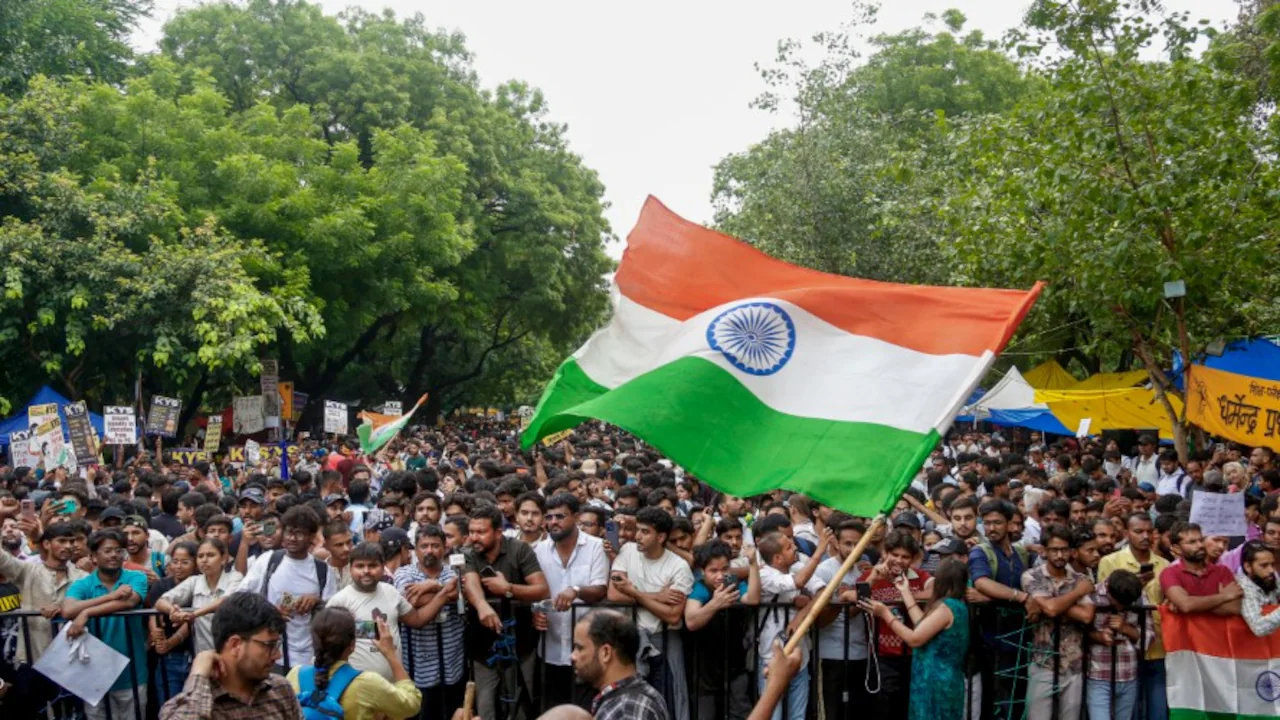
The recent activities of the Cockroach Janata Party (CJP) offer an example of this larger democratic process. In June 2026, CJP organised a protest at Delhi’s Jantar Mantar raising concerns about alleged irregularities in major examinations and wider issues in the education system. The organisation has subsequently continued to raise education-related concerns in different parts of the country.
The larger question is how such protests can move from confrontation towards constructive dialogue.
Protest is a democratic right
Dissent is an important part of democracy. Citizens and organisations have the right to raise public concerns, organise peaceful protests and demand accountability.
But protest is a means, not the final objective.
A demonstration can draw attention to a problem. A memorandum can place a demand before the authorities. But a lasting solution normally requires discussion, examination of facts and administrative action.
This is where dialogue becomes important.
Dialogue does not mean surrender
There is sometimes a perception that a movement must remain permanently opposed to the government. That is not necessarily the case.
An organisation can strongly criticise government policies and still engage with government representatives. Similarly, a government can listen to protesters without accepting every demand.
Dialogue simply creates an opportunity to examine the issues and identify areas where solutions may be possible.
This is particularly important when issues involve education, examinations, employment or public services, where solutions may require action by several departments.
The government’s responsibility
Once a public grievance is brought before the government, responsibility also rests with the administration.
A meeting or an assurance is only the beginning. A meaningful response requires:
– examination of the grievance;
– verification of facts;
– involvement of the appropriate department;
– coordination between authorities where necessary;
– a clear course of action; and
– monitoring of implementation.
The public ultimately wants to know whether anything has changed on the ground.
The movement also has a responsibility
Public organisations also have an important responsibility.
Their demands should be clear, factual and supported by evidence wherever possible. Allegations should be distinguished from established facts, particularly in an age when information spreads rapidly through social media.
A movement becomes more effective when it combines public pressure with constructive engagement and remains focused on the problems faced by citizens.
From protest to results
The most important stage begins after a meeting between a movement and the government.
Were the demands examined?
Was responsibility assigned?
Was any decision taken?
Has implementation begun?
Have ordinary citizens received any benefit?
These are more meaningful measures of progress than statements or assurances alone.
If a government takes action on a genuine public grievance, that action should be acknowledged. If a problem remains unresolved, the organisation and citizens retain the democratic right to continue raising the issue.
Public interest must remain central
Neither a movement nor a government should view every issue simply as a contest between victory and defeat.
The ultimate question is whether the public problem has been addressed.
If dialogue between an organisation and the government helps solve a genuine grievance, the benefit belongs to the people—not to one political side.
At the same time, dialogue should not mean that public scrutiny ends. Progress must remain open to examination.
Democracy works when all sides engage
India’s democracy is large and diverse. Differences between citizens, organisations and governments are natural. Agreement on every issue is neither possible nor necessary.
What matters is that the channels of communication remain open.
Protest raises the issue.
Dialogue creates the possibility of a solution.
Government action delivers the result.
And citizens ultimately judge the outcome.
The experience of the Kakroch Janata Party should therefore be viewed in this broader context. Its protests have brought particular public concerns into the political and public debate. The next and more important question is whether continued engagement can help convert those concerns into specific, measurable outcomes.
That is the real journey from protest to resolution—and it is one of the essential processes through which democracy works.